Kayaking for Beginners in Rishikesh: Is It Safe, and Do You Need to Swim?
What swimming level you need, what gear and crew keep you safe, and how a course makes sure you never face water you're not ready for.
Updated
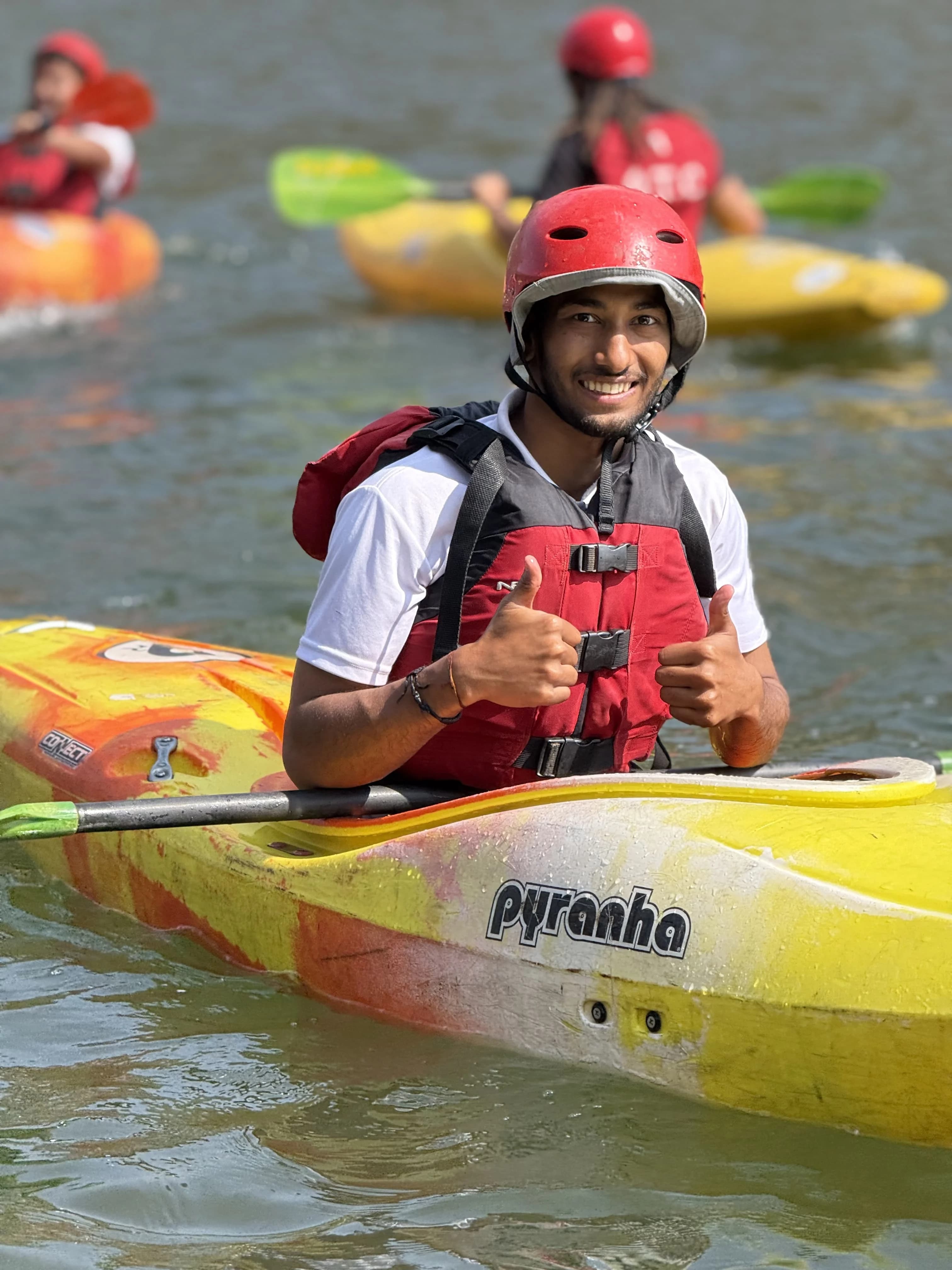
The Ganga at Rishikesh is a real whitewater river, so it's sensible to ask whether a beginner should be on it. The honest answer is that it's safe when you learn step by step with the right people around you. Most of the risk comes from going out without training or going onto water that's harder than your skills.
Do you need to know how to swim?
For a kayak course, yes, a little. You don't need to be a strong swimmer. You'll wear a Type V life jacket the whole time, which keeps you afloat. But you will end up in the river on purpose: the first skill you learn is the wet exit, where you capsize and slide out of the boat. You need to be relaxed in water when that happens.
Rafting is different. Non-swimmers can raft the easier routes because the guide steers and you stay in the boat. Kayaking means you're in charge of your own boat, so being comfortable in water matters.
How a course keeps beginners safe
- Dry land first. Day one starts on the riverbank, learning the boat and the strokes before you get in the water.
- The wet exit before anything else. You practise capsizing in calm water five to ten times until it no longer scares you.
- One small step each day. Flat water, then gentle current, then your first Class II rapid on day three. Nobody faces a rapid before they've practised the skills it needs.
- Small groups. A maximum of five students per instructor.
- A safety kayaker on every river session, sitting above the rapid while your instructor waits below it.
- Certified instructors. Ours hold WPA / BCU whitewater kayak instructor qualifications.
The safety gear you'll wear
- Type V life jacket (PFD)
- Helmet
- Spray deck, which keeps water out of the boat and comes off with one pull
- Neoprene wet suit and booties from December to March
Who should wait
- Anyone who panics in water or can't swim at all. A few sessions in a swimming pool first will make the course far more enjoyable.
- Anyone wanting to kayak in July or August. The river is closed for the monsoon.
- Anyone who isn't feeling well that day. Tell your instructor; skipping a session is better than paddling unwell.
Where to start
Our 4-day beginner course is built for people who have never been in a kayak. If you're unsure about your swimming, message us before you book and we'll talk it through.
Quick answers
Is kayaking safe for beginners in Rishikesh?
Yes, on a proper course. You start on dry land and flat water, build up to Class II over several days, and always have an instructor and a safety kayaker on the water with you.
Can non-swimmers do kayaking in Rishikesh?
For a kayak course you need basic swimming and to be comfortable in water, because you'll practise capsizing. The life jacket keeps you afloat, but you shouldn't panic in water.